
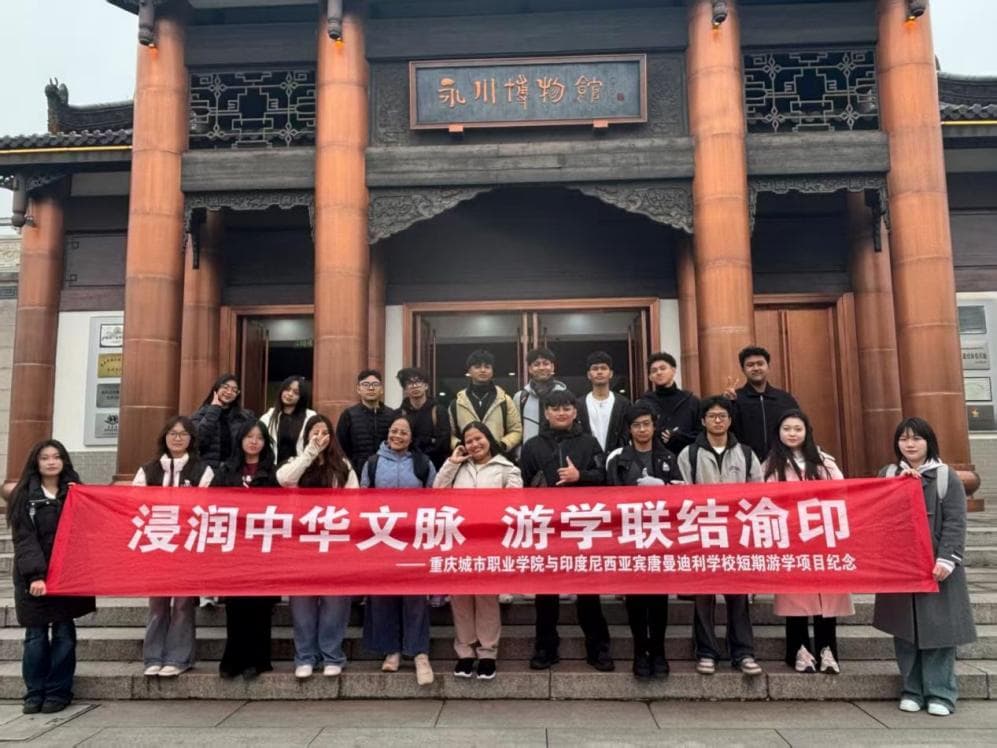
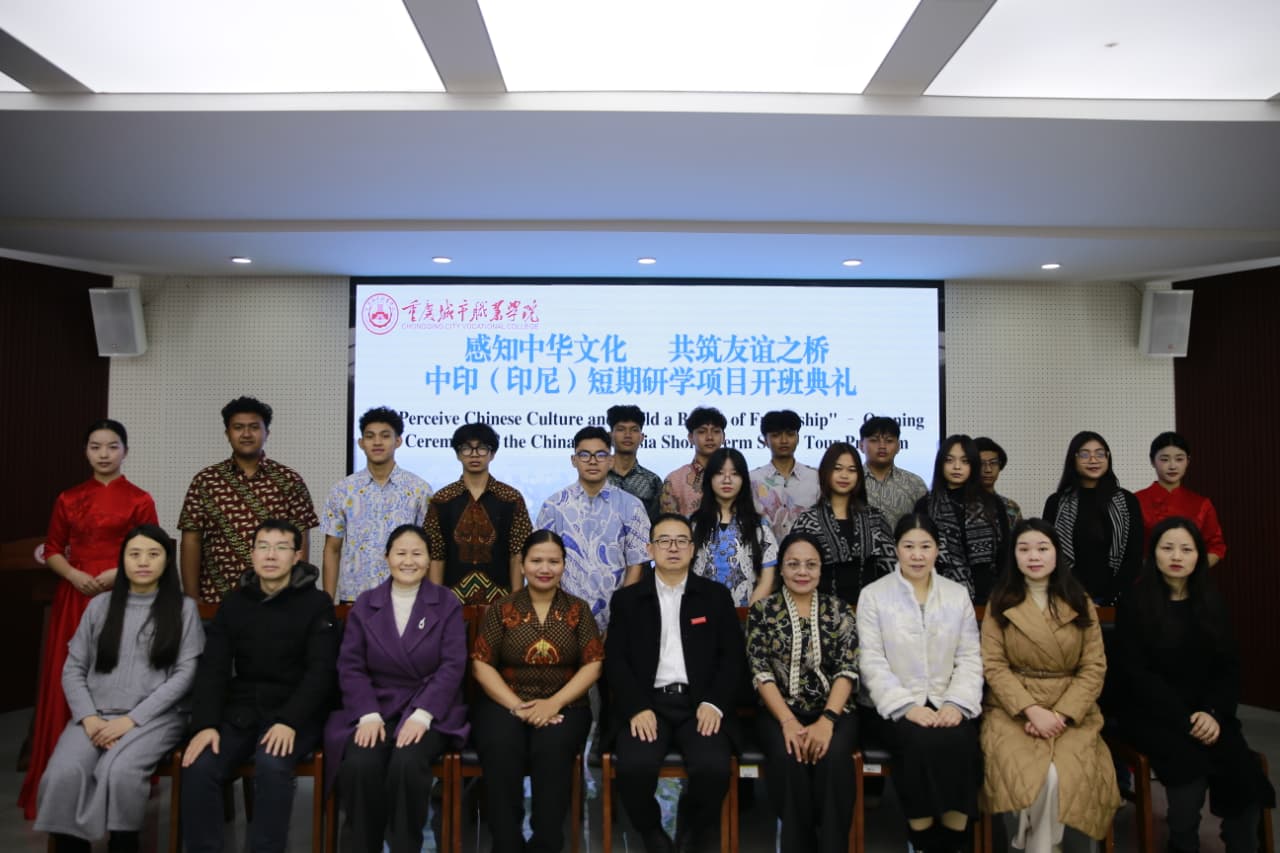
To build a bridge for mutual learning between Chinese and Indonesian youth, from December 7th to 12th, 2025, the School of Culture, Tourism and Health at Chongqing City Vocational College successfully hosted a short-term study tour program to the Bintang Mandiri School in Indonesia. The six-day immersive program allowed the Indonesian study group to fully experience the charm of Chinese culture, the vitality of urban development, and the characteristics of vocational education, fostering friendship and building consensus through cross-cultural interaction.
Meticulous preparation: A multi-dimensional plan sets the stage for the journey, and warmth is felt from the very first meeting.
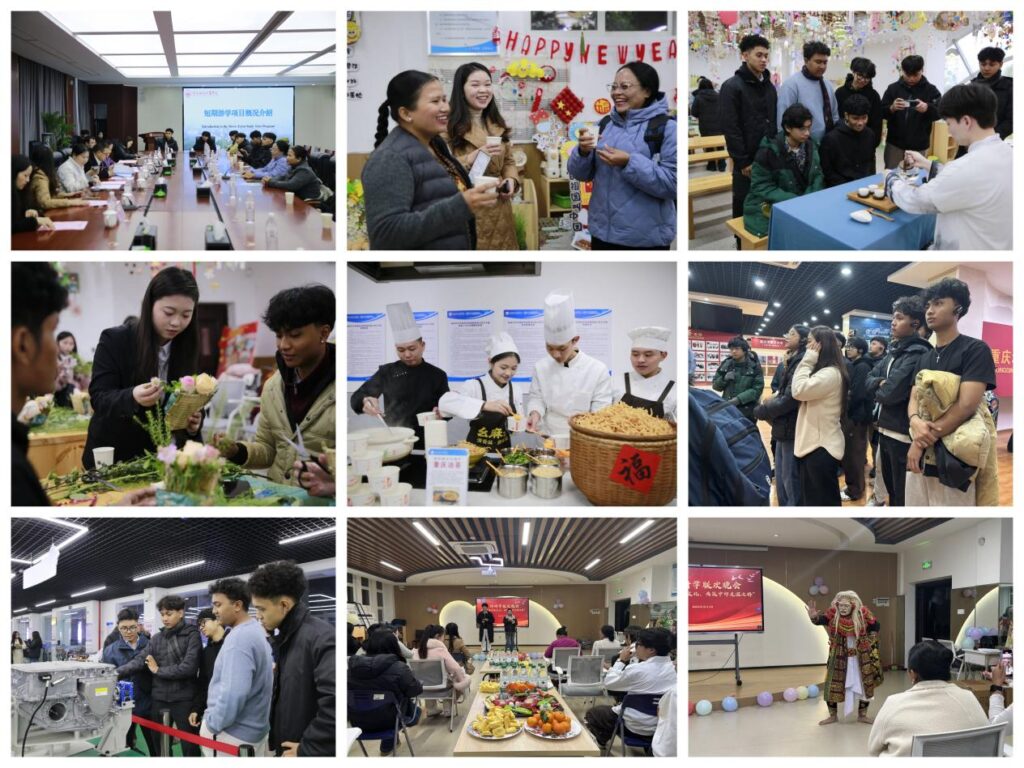
With "cultural immersion + practical experience" as its core, the academy completed the itinerary planning, resource coordination, and service refinement months in advance. Late at night on December 7, the reception team went to the airport to pick up the study tour group in bilingual language, providing meticulous service to ease the group's sense of unfamiliarity; the next day, the cultural exploration journey began with flower arrangement and tea ceremony demonstrations.
In-depth study tours: School-local government collaboration builds platforms, integrating knowledge and practice to understand the essence.
The project innovatively adopts a dual-track model of "on-campus practice + city exploration". In the on-campus phase, the study group visited the school history museum, the aviation college, and master studios, experiencing vocational education innovation and the inheritance of traditional skills through skill demonstrations and interactive experiences. In the school-city collaboration phase, the study group visited the Yongchuan Museum, decoding the millennium-old cultural heritage with professional explanations and bilingual assistance; strolled along the shores of Shennv Lake, experiencing firsthand the concept of building an ecologically livable city; explored the Yongchuan night market, feeling the warmth of everyday life through local delicacies; and visited the Yongchuan Vocational Education Center, Chongqing University of Arts and Sciences, and Southwest University, gaining a systematic and in-depth understanding of the practical characteristics of modern vocational education in China and the educational philosophy of higher education.
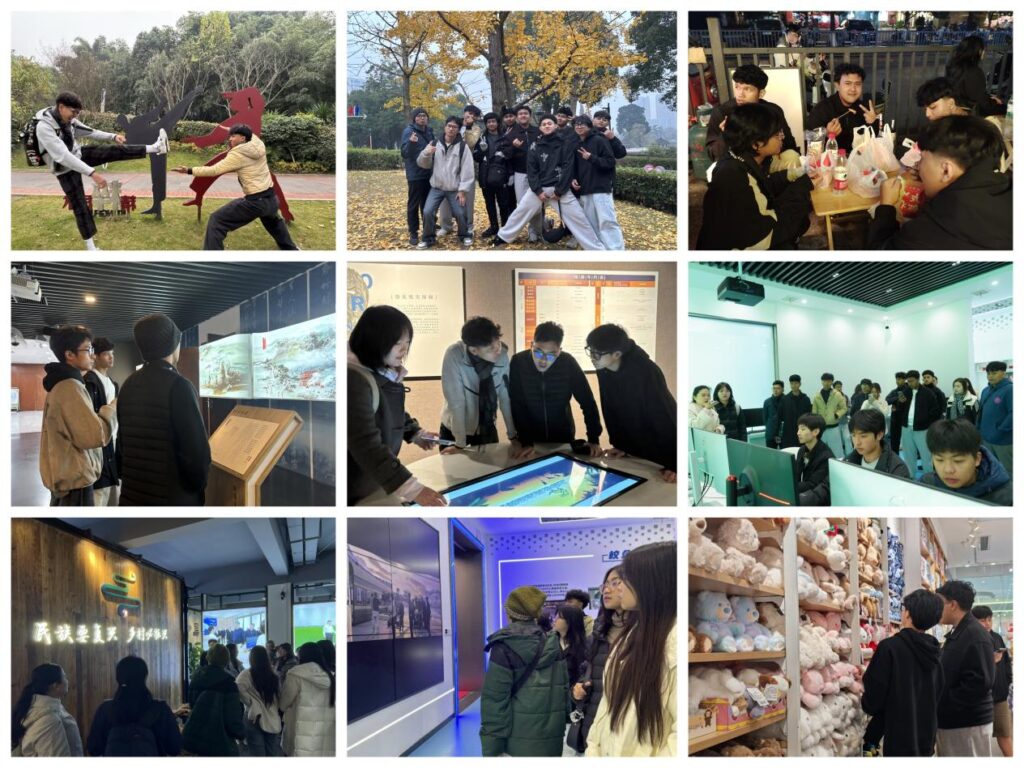
Essence of Chongqing: Exploring the Cultural Heritage of Chongqing and Writing a New Chapter of Unity
The one-day study tour in Chongqing's main urban area was full of highlights. The engineering marvel of the "light rail passing through a building" in Liziba, the blend of ancient and modern in Jiefangbei, and the architectural wisdom of Hongyadong allowed the study group to deeply understand the historical heritage and development of this mountain city. During the trip, on-campus social activities built interactive platforms through singing, dancing, and games, transforming cross-cultural exchange from "one-way perception" to "two-way engagement."
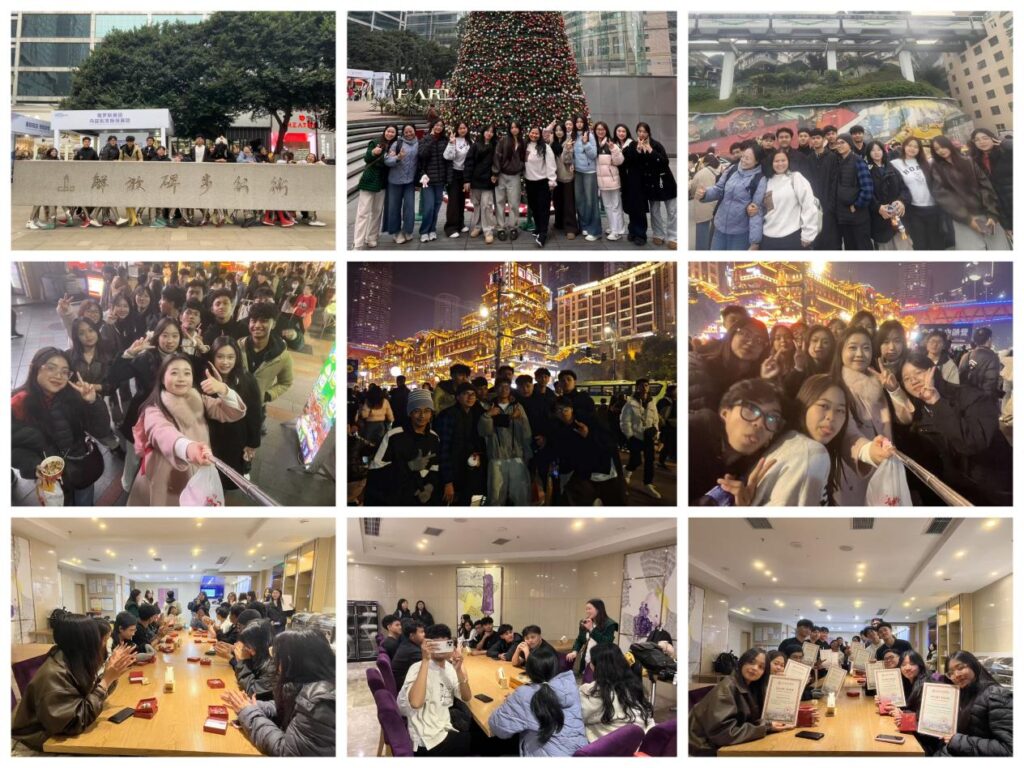
A successful conclusion: Friendship endures into the future; mutual learning and win-win cooperation usher in a new chapter.
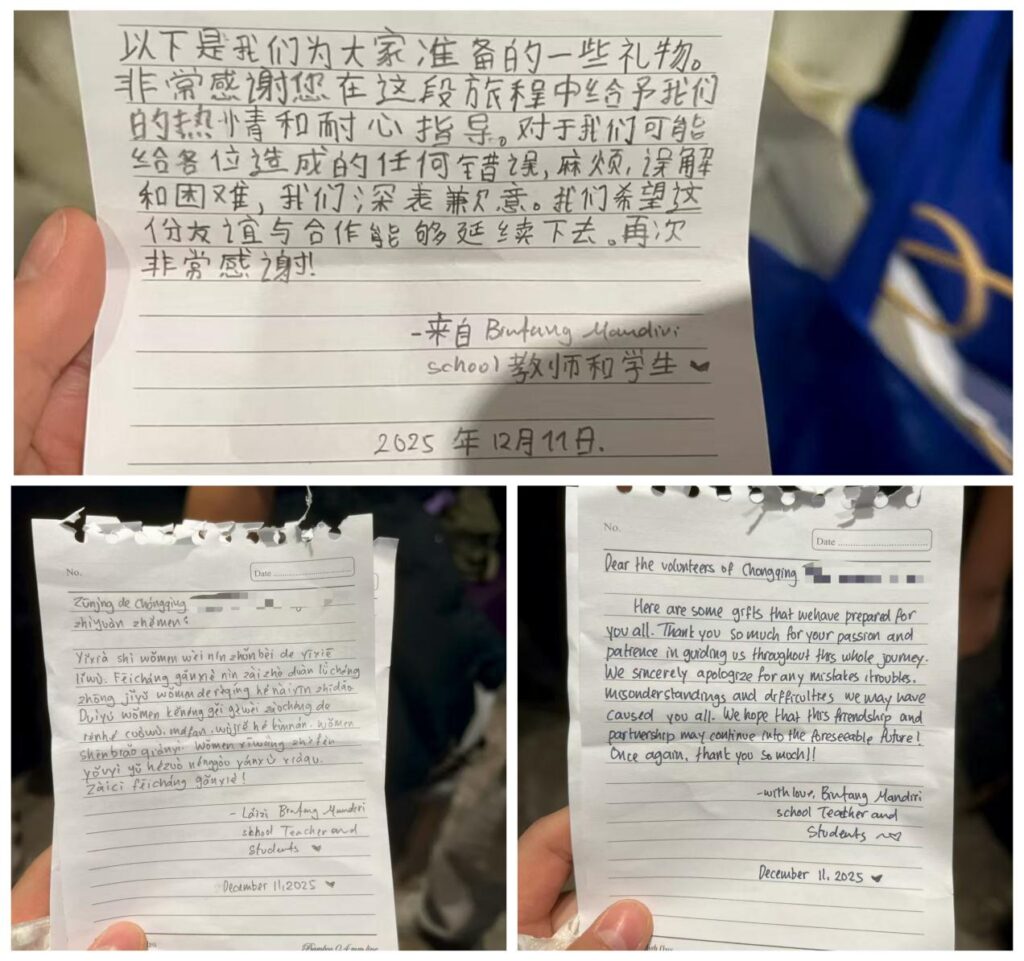
The project successfully concluded on December 12th. The Indonesian study tour group presented gifts and a letter of thanks, expressing their appreciation for the trip and their hope for continued friendship. This activity was an important practice of the college's "international education" philosophy, building a long-term bridge for exchange between Chinese and Indonesian youth through scientific planning and meticulous support. In the future, the college will continue to deepen its involvement in cross-cultural exchange, using education as a bond and culture as a bridge to contribute vocational education's strength to the "Belt and Road" initiative's people-to-people connectivity and the building of a community with a shared future for mankind.
This short-term study tour to Indonesia is an important practice of the School of Culture, Tourism and Health at Chongqing City Vocational College in implementing the concept of "international education" and promoting cultural exchanges between China and other countries. Through a scientifically designed itinerary, resource integration through school-local government collaboration, and meticulous service guarantees, the Indonesian study tour not only allowed the participants to fully experience Chinese culture and development achievements, but also built a bridge for long-term exchanges between Chinese and Indonesian youth. In the future, the college will continue to deepen its involvement in cross-cultural exchange, focusing on its professional strengths and contemporary needs, and planning more high-quality study tour programs. Using education as a link and culture as a bridge, the college will contribute its vocational education strength to promoting people-to-people connectivity among countries along the Belt and Road Initiative and building a community with a shared future for mankind.